
Harvesting Broad Beans, Onions and Rhubarb During a Heatwave
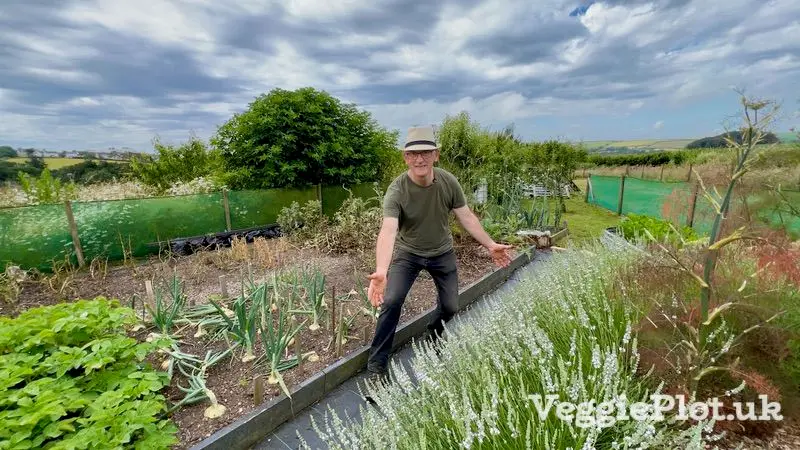
It was one of those allotment days when the sky was a beautiful blue, but the heat was already making the work feel heavier than usual. We are in the middle of a proper heatwave, so I wanted to get up to the plot, harvest what needed harvesting, check how everything was coping, and then get back out of the sun before I overdid it.
The main job for the day was the broad beans. The Aquadulce Claudia plants had moved on quickly since I last checked them. Not long ago they were still fresh and green, but now the plants were starting to show rust and the pods were ready. Broad beans are best picked before they get too mature and tough, so I knew I needed to get at least part of the crop off today. The RHS also recommends picking young pods regularly, both for quality and to keep plants productive for as long as possible.
A quick walk round the plot
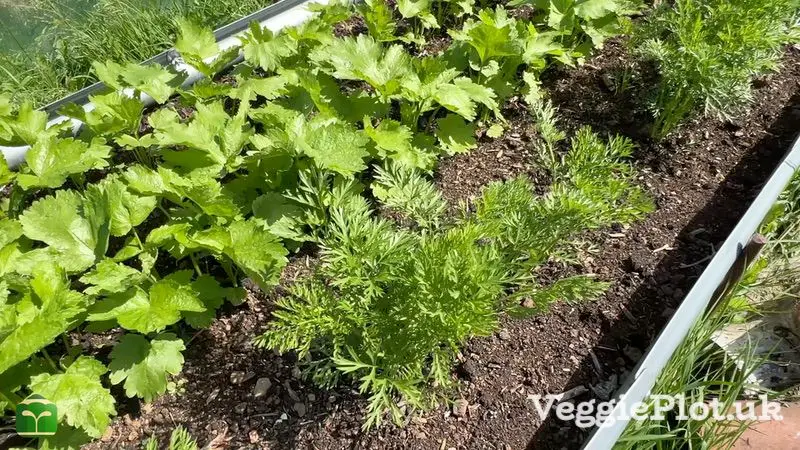
Before starting on the harvesting, I had a wander round to see how the rest of the plot was doing. The parsnips are looking strong, which is always a pleasing sight, although they will need thinning at some point. I always feel a bit guilty thinning seedlings when they have germinated well, but it is one of those jobs that makes a real difference later on. Crowded roots rarely grow into good roots.
The carrots sown recently are coming through too, along with the earlier rows, so I am happy with those for now. One final row has germinated especially well, which I think is Chantenay Red Cored 2. Some of the other seed seems to have been a bit hit and miss, and I suspect a few rows may need re-sowing. That is often the way with carrots. One row behaves perfectly, another sits there as though nothing was ever sown.
The flower bed is coming along nicely as well. There is a white-flowered heather starting to bloom, and although the bees have not really found it yet, I expect it will be busy once the flowers are fully open. I have still got apple trees to plant and grass to cut, so the jobs list is not exactly getting shorter, but that is the allotment for you.
Onions starting to fall over
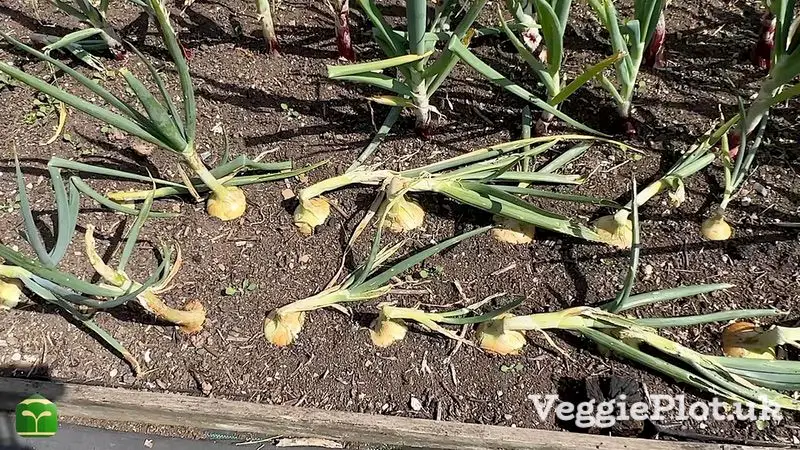
The onions are looking good now, and quite a few have reached the stage where the tops have fallen over. Once onions begin to yellow and topple, it is a sign they are reaching maturity, and they can be carefully lifted before the foliage dies away completely. The RHS advises lifting bulbs gently and allowing them to dry, which is exactly what I plan to do with most of mine.
I took one decent-sized onion home to use straight away. It was a good solid bulb, and there is no point curing every single one if I know I can use one fresh in the kitchen. The rest can stay drying when they are ready, as long as the weather and timing allow.
The red onions are a mixed story, as they often are. Some have gone to seed, and I have nipped the tops off, but there are still some good bulbs among them. Even when a crop is not perfect, there is usually something worth taking from it.
Broad beans ready before they go too far
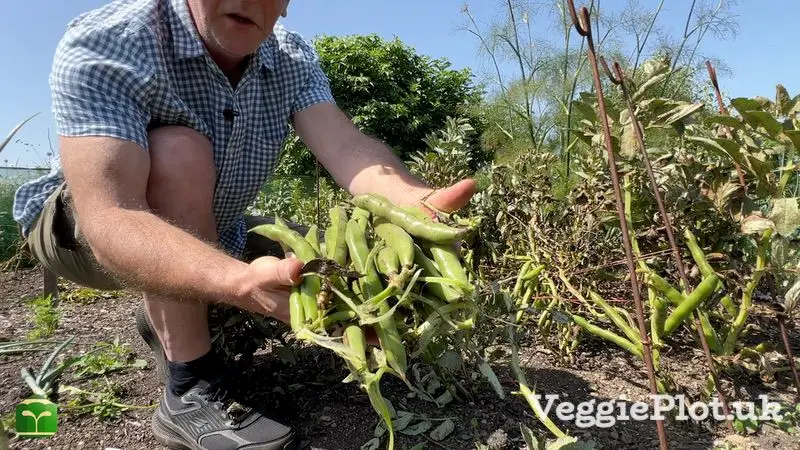
The Aquadulce Claudia broad beans were the crop that really needed attention. I was surprised how quickly they had gone over, but the heat has a habit of rushing things along. If I left them much longer, they would start getting too mature, and at that point they are better kept for seed than eaten fresh.
I started picking from just a few plants and quickly had a lovely pile of pods. Fresh broad beans are one of those crops that make the shelling worth it, especially when they are picked at the right stage. I did not harvest the whole row in the end, partly because I had enough for one day and partly because the heat was getting too much. There is no sense in pushing on just for the sake of it when the sun is that strong.
I have been recording harvests in the VeggiePlot app, which has been useful for keeping track of what is coming off the allotment. It lets me log crop weights and estimate their value, either using UK values or my own figures. At the moment I am already well over £100 worth of produce from the plot, which is a nice reminder that even small harvests soon add up.
Garlic, rust and a small harvest
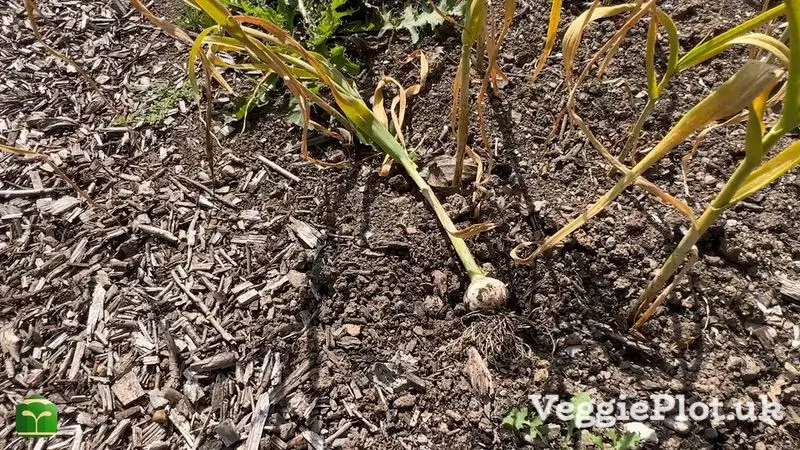
The garlic has rust as well, and it is ready to come out and dry. I planted it a bit late, so I was not expecting huge bulbs. One of the bulbs I lifted felt almost like a single round clove, a bit like elephant garlic, rather than a fully divided bulb. It is still usable, but it shows how timing can make a difference with garlic.
Garlic is usually ready once the leaves begin to turn yellow, and it is best not to leave it too long because late-lifted bulbs can open up and store less well. The RHS recommends lifting garlic carefully with a fork and handling the bulbs gently, as bruising can reduce storage potential.
I took two garlic bulbs home with the onion. They are not the biggest garlic I have ever grown, but they are still a harvest, and that counts.
Potatoes, fruit and a revived rhubarb bed
The potatoes are doing well. The first earlies, second earlies and maincrop are all moving along, and the maincrop are just beginning to flower. I may nip the flowers off at some point, but for now they look healthy enough under the foliage.
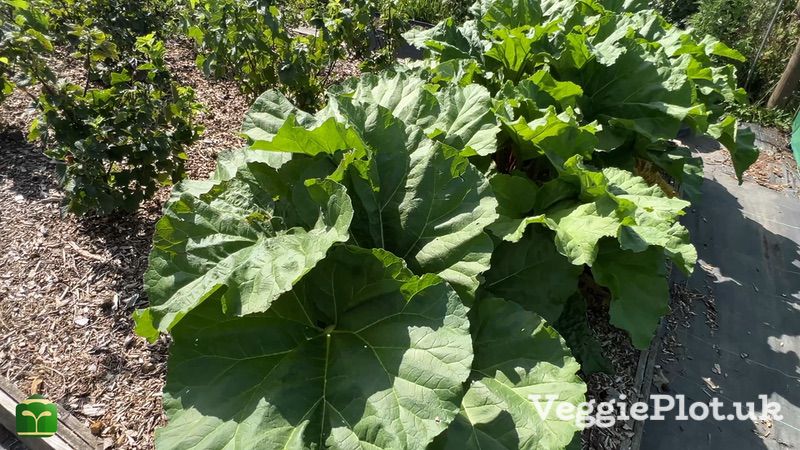
The fruit bed has been a pleasant surprise, especially the rhubarb. Earlier in the season it looked pretty poor, and I was not sure whether it was going to come to much at all. It turns out it either needed more water, or it has finally got its roots down properly, because it has really picked up. I think the variety is Timperley Early, and these crowns were pieces I chopped off earlier in the year when I converted the bed into a fruit bed.
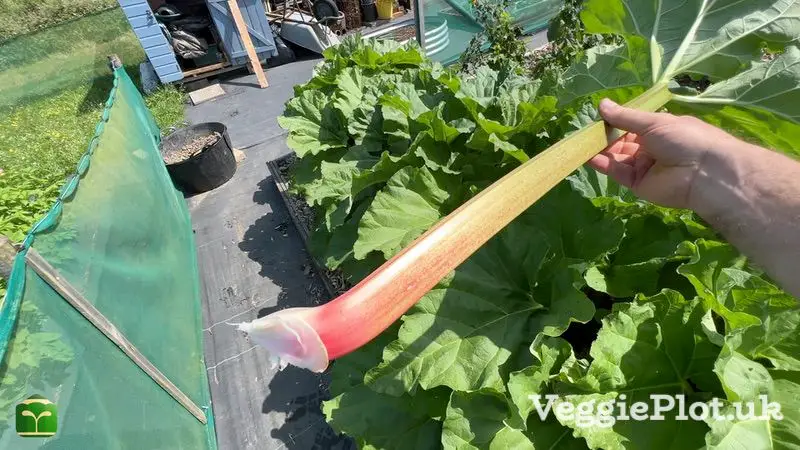
I would not normally harvest much rhubarb in its first year after planting or dividing, because young plants need time to build strength. Taking too much can knock them back the following year. Because there was so much growth, I decided to take just three stems and leave the rest of the plant to keep feeding the crown.
To harvest rhubarb, I reached right down to the base, gently twisted and pulled the stems away rather than taking too much. The leaves came off and went onto the compost heap, while the stalks came home. Rhubarb leaves should not be eaten because they contain oxalic acid, but the RHS notes that they can safely be composted because the oxalic acid breaks down during decomposition.
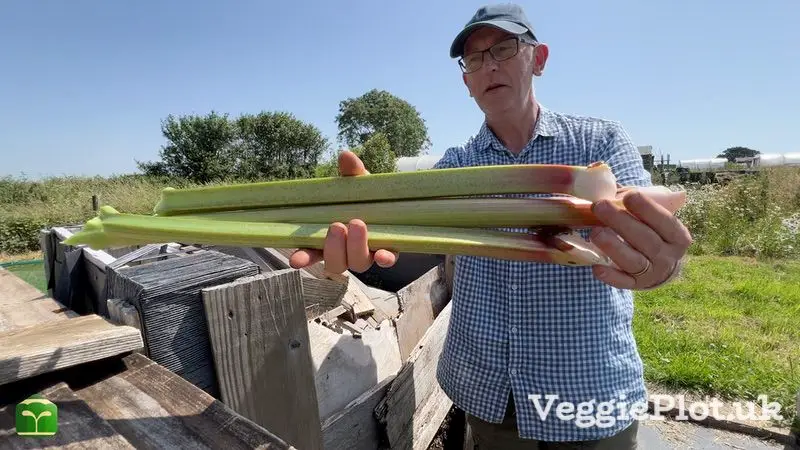
Those three stems felt like a real bonus. A few weeks ago I thought I might lose the plants altogether, so coming away with a small harvest was more than I expected.
Berries, seedlings and a few jobs waiting
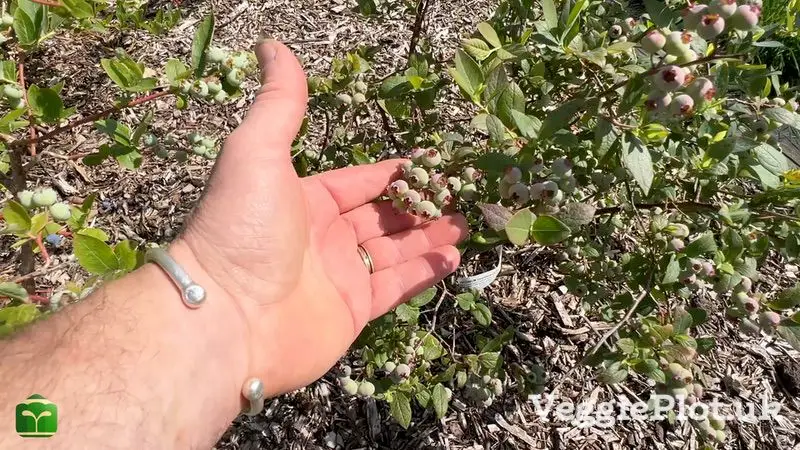
The gooseberries, blueberries and other fruit are all doing fine, but I need to get some netting sorted before they ripen properly. Once the birds decide the fruit is ready, they tend to be much quicker than I am.
The new raised bed from the last seed sowing session has a few things coming up, although some of it looks a little patchy. I will probably re-sow the gaps rather than worry about it too much. Germination can be uneven in hot, dry weather, and sometimes the simplest answer is just to try again.
There are still onions to lift, grass to cut, apple trees to plant and spaces that need filling. The plot is productive, but it is also in that busy summer stage where every finished job reveals the next one.
Knowing when to stop in the heat
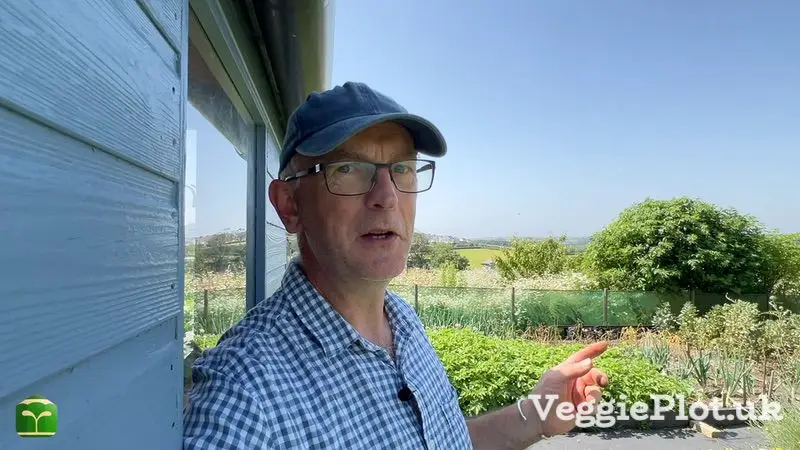
By the time I had picked the broad beans, lifted a couple of garlic bulbs, pulled one onion and taken three sticks of rhubarb, I could feel the sun catching my arms. That tingling feeling is usually a good warning sign, so I packed the harvest into a bag and decided that was enough for the day.
The haul was simple but lovely: a good pile of broad beans, one fresh onion, two garlic bulbs and three stems of rhubarb. It was not a huge harvest by allotment standards, but it was exactly what needed taking, and on a day that hot, that was enough.
I still need to plant out into the empty spaces, but I am going to wait until this heatwave passes. Young plants and delicate seedlings do not need the extra stress of being moved into hot ground under fierce sun. I would rather keep them shaded, keep them watered, carry on hardening them off, and plant them when the weather backs off a little. Once they are in, they can be watered in properly and given a better chance to settle.
That is it from the allotment for today. A hot visit, a useful harvest, and a good reminder that sometimes the best gardening decision is knowing when to stop.

