
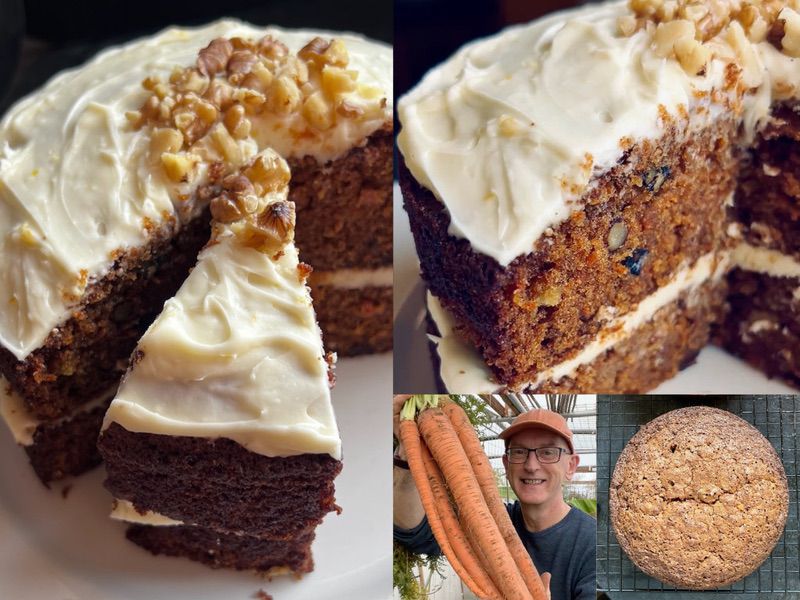
Manpukuji Carrot Cake Recipe
I’ve made plenty of carrot cakes over the years, but this one has a bit more meaning behind it. It’s made using Manpukuji carrots that I grew in the polytunnel in an old wheelie bin!
Manpukuji carrots are an old Japanese variety with a long history and a very different character from the modern supermarket carrot.
The recipe itself is steady and reliable. Oil-based, well-balanced, and forgiving. It produces a soft, moist sponge with enough texture from the nuts and fruit to keep each bite interesting. The cream cheese icing is simple, with a little lemon to stop it from feeling too rich.
Before getting into the method, it’s worth spending a bit of time on the carrots themselves, because they really are the reason for making this version.
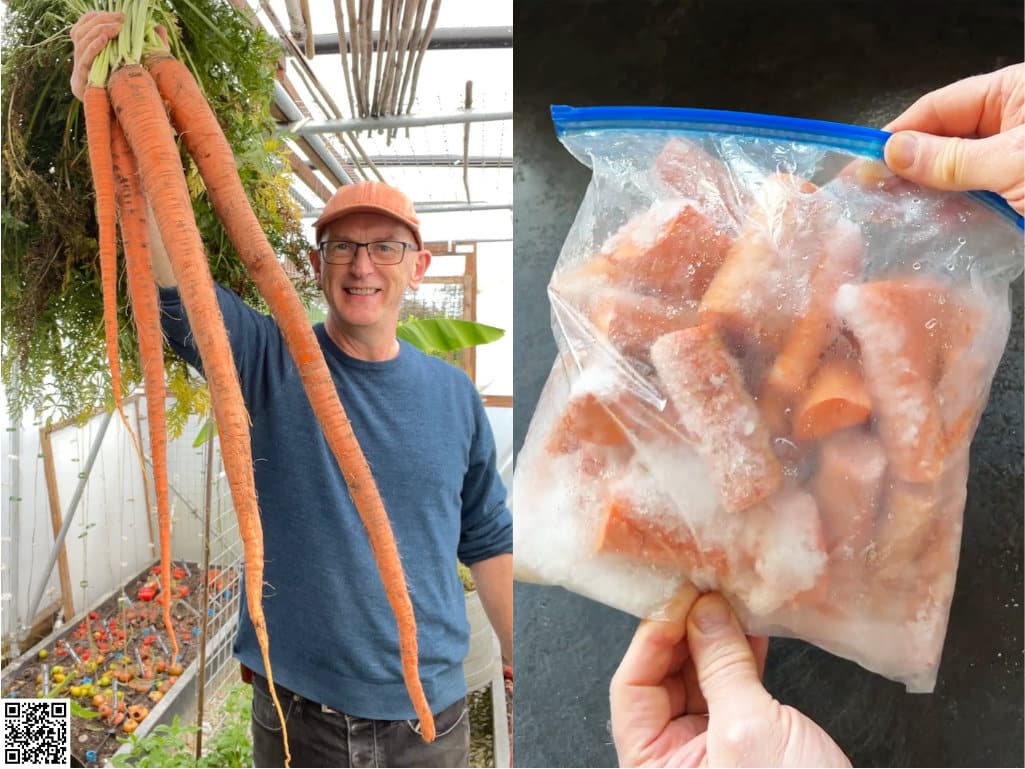
About Manpukuji Carrots
Manpukuji carrots are a traditional Japanese carrot said to date back around 400 years. It’s part of a group often referred to as Kyo yasai, which are heirloom vegetables from the Kyoto region. These varieties were selected long before modern breeding focused on uniformity, shelf life and transport.
What you get instead is character.
What they are like to grow
Manpukuji carrots are large, often much longer than standard varieties, with a broad shoulder and a gradual taper. The colour is usually a rich orange, sometimes slightly deeper than modern types.
They need a bit more care in the soil. Because they grow long and straight, they prefer a deep, stone-free bed. Any obstruction in the soil tends to cause forking. If you’ve ever grown long carrots before, it’s the same principle, just more so.
They’re not a quick crop either. They take their time, which suits a steady, seasonal approach to growing rather than anything rushed.
Flavour and texture
This is where they stand apart.
Manpukuji carrots tend to be less watery and more dense than modern hybrids. The flavour is fuller, slightly earthy, and often a little sweeter, especially when grown well and harvested at the right time.
That density makes a difference in baking. When grated, they hold their structure better and don’t disappear into the sponge. You get small flecks of carrot throughout the cake rather than it blending away completely.
Why they work so well in carrot cake
A good carrot cake relies on the carrots for moisture, but also for flavour. Modern carrots can sometimes feel a bit neutral once baked.
These don’t.
They bring a depth that sits well with cinnamon, nuts and dried fruit. The result is a cake that tastes more rounded and less sugary.
If you grow your own, this is exactly the sort of recipe worth saving them for.
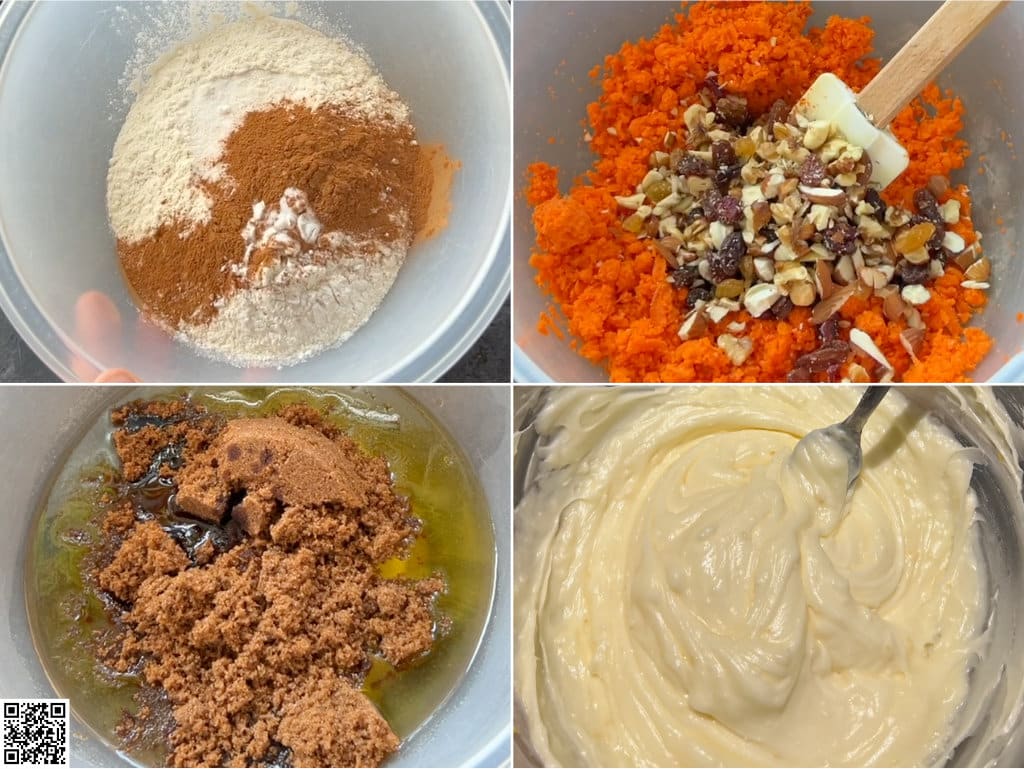
*I am not a chef or a food blogger, I grow fruit and vegetables and love to eat good food that I believe anyone can make. If I don’t describe something in a ‘foodie’ way, forgive me and have a go anyway. Also, as I’m in the UK, I measure in grams using digital weighing scales rather than cup measurements. If you use cups, use my cups-to-grams conversion calculator.
Ingredients
Dry ingredients
260g plain flour
2 teaspoons baking soda
½ teaspoon fine sea salt
1½ teaspoons ground cinnamon
Wet ingredients
295ml vegetable oil
200g granulated sugar
190g dark brown sugar
1 teaspoon vanilla extract
4 medium eggs (added one at a time)
Fold-ins
300g grated Manpukuji carrots
100g chopped mixed nuts (pecans, hazelnuts, almonds, walnuts)
40g mixed dried fruit (raisins, sultanas, cranberries)
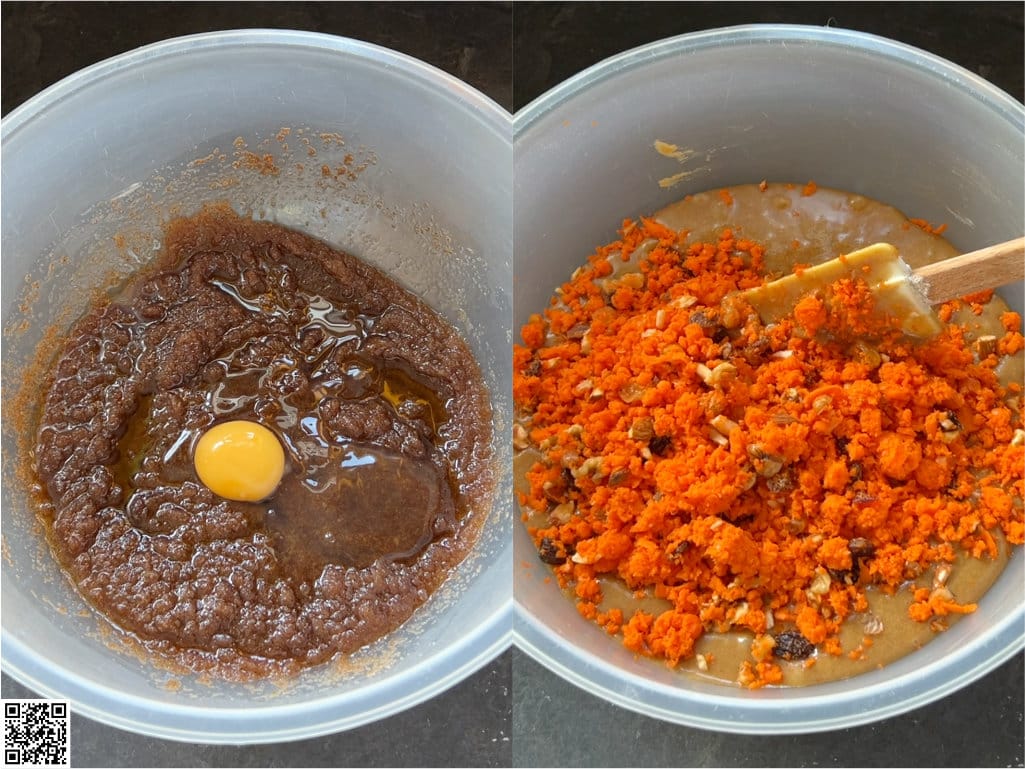
Method
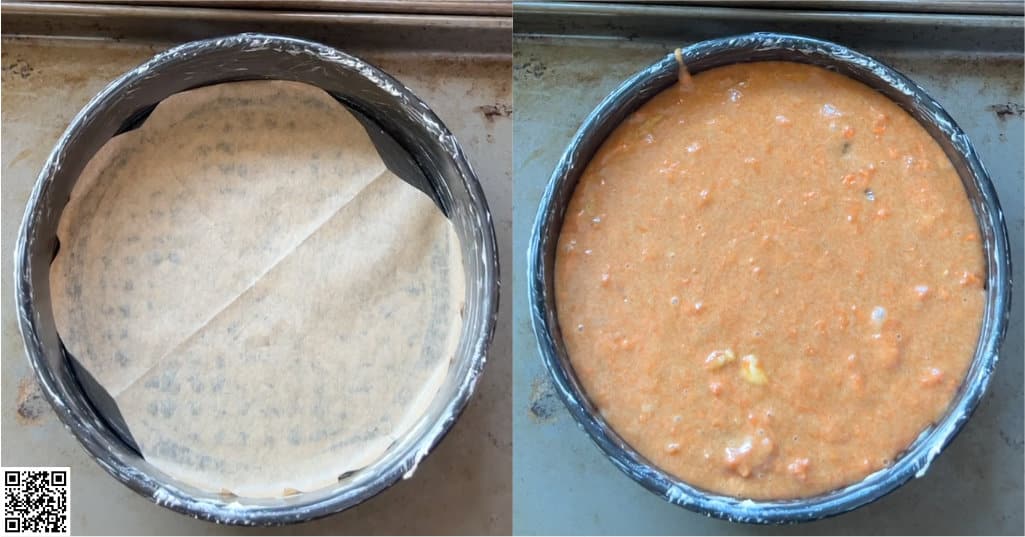
1. Prepare the tins
Grease two 7-inch cake tins with butter and line the bases with non-stick parchment. A 9-inch tin would give a slightly more even bake, but 7-inch works if you allow a bit more time.
2. Mix the dry ingredients
In a large bowl, whisk together the flour, baking soda, salt and cinnamon.
3. Mix the wet ingredients
In another bowl, combine the oil, granulated sugar, dark brown sugar and vanilla extract. Mix until smooth. Add the eggs one at a time, mixing well after each addition.
4. Combine
Add the dry ingredients to the wet mixture in three stages and fold in gently with a spatula until combined. Avoid overmixing.
5. Add the fold-ins
Fold in the grated carrots, chopped nuts and dried fruit until evenly distributed.
6. Bake
Divide the mixture evenly between the tins.
Bake in an oven at 180°C for around 45–55 minutes. Mine needed closer to 55 minutes as I was using the 7-inch tins. Check with a skewer in the centre when the time is up. If it comes out clean, then the cake is cooked. If not, keep cooking and test every 5 minutes.
7. Cool
Leave to cool in the tins briefly, then turn out onto a wire rack and allow to cool completely before icing.
Cream Cheese Icing
Rind of 1 lemon, finely diced
100g salted butter, softened
250g icing sugar
100g soft cheese (Philadelphia or similar)
Method
Beat the butter until smooth. Add the icing sugar gradually and mix until combined. Add the soft cheese and mix gently until smooth. Stir through the lemon rind.
If it feels too soft, chill it briefly before using.
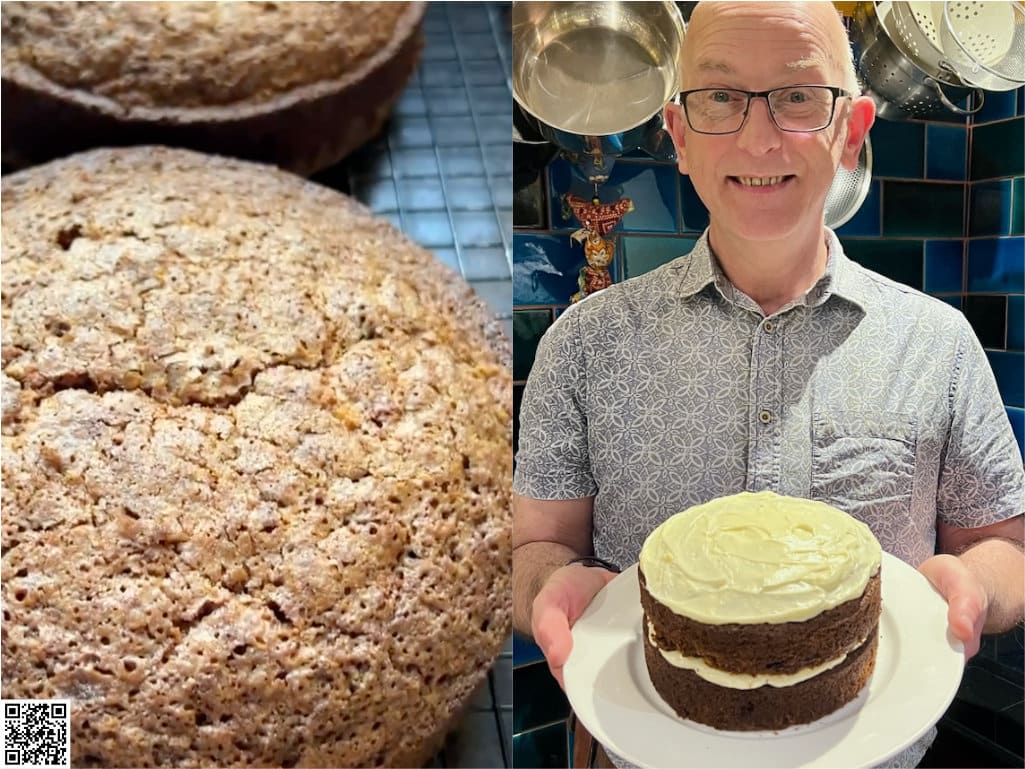
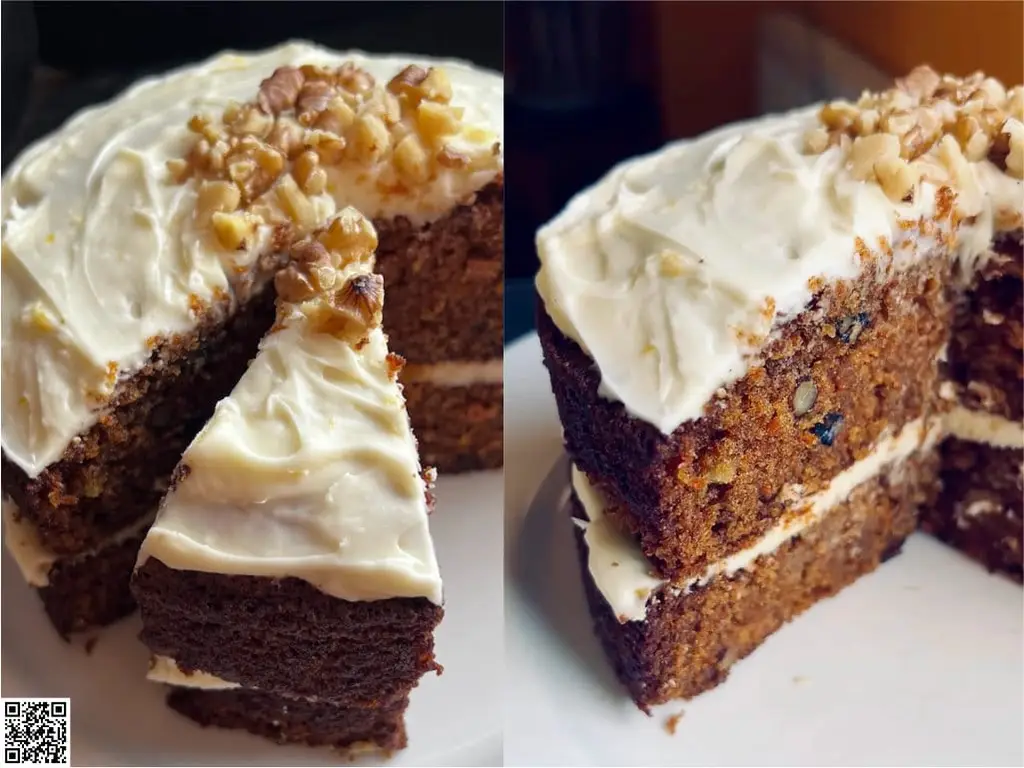
Putting it together
Spread a generous layer of icing over one sponge, place the second sponge on top, and finish with more icing. Scatter chopped walnuts over the top.
A few practical tips
-
Grate the carrots fairly fine, so they distribute evenly through the mixture
-
Don’t overmix once the flour is added or the cake can become dense
-
Check the cake properly before removing from the oven, especially in smaller tins
-
Always let the sponge cool fully before icing
Final thoughts
This is a straightforward carrot cake, but the Manpukuji carrots give it a bit more depth and make it worth doing properly.
It’s also a good reminder that what you grow can change what you cook. When you start with a better ingredient, the rest tends to fall into place.
If you’ve grown Manpukuji before, it would be interesting to hear how you’ve used them, especially beyond the usual roasting or fresh eating.
Recipe card – free download
Feel free to download, print and share this recipe card.


